Skincare by age
Skincare for Tweens (Ages 10–12): What Changes and What They Need
Puberty, first pimples and the social-media skincare craze: what 10, 11 and 12 year olds really need, and what to skip.
Quick answer
Most tweens need three things: a gentle face wash morning and night (and after sport), a light moisturiser, and a broad-spectrum sunscreen every morning. That covers the extra oil, sweat and first pimples puberty brings. They don't need retinol, exfoliating acids, vitamin C serums or 10-step routines from social media.
Most 10 to 12 year olds need a simple three-step routine: a gentle face wash morning and night, a light moisturiser, and a broad-spectrum sunscreen every morning. That handles the extra oil, sweat and first pimples puberty brings, without the serums and acids trending on social media.
This guide is for parents of tweens in India. It explains what's changing, how to respond to the "Sephora kids" craze, what to avoid, and how to talk about skin in a way that builds confidence. Younger or older child? See skincare for kids aged 7–9 or skincare for teens (13–17).
What changes in a tween's skin between 10 and 12?
Puberty. KidsHealth (Nemours) says most girls start puberty between 8 and 13, and most boys between 9 and 14. Hormones from the adrenal glands bring underarm hair, body odour and acne, so this is often when skin starts to feel oilier and the first blackheads or pimples appear.
You may also notice more sweat after games and more smell by the end of a school day. Timing varies a lot: KidsHealth reminds parents that classmates can be at very different stages, and all of it is normal. Our guide to body odour at 9 or 10 covers the first deodorant.
Why is my tween suddenly asking for serums? (The "Sephora kids" trend)
Social media. Short videos show children and young teens doing long routines with serums, toners, masks and mists. A 2025 study in the journal Pediatrics, summarised by the American Academy of Pediatrics (AAP), looked at 100 popular TikTok skincare videos and found more than 250 different products. About three in four of the 25 most-viewed videos promoted products containing known allergens, such as fragrance.
A 2026 viewpoint in IJDVL, the journal of the Indian Association of Dermatologists, Venereologists and Leprologists, notes that children following these routines use an average of six products each, and only about a quarter of daytime routines shown on social media include sunscreen.
Dermatologists' concern is simple. The AAP describes tween and teen skin as thinner, more sensitive and more easily irritated than adult skin, and these routines stack up ingredients made for adult problems. The better response is usually not a flat "no" but a swap: keep the fun of a routine, with products that suit their age. Our guides on skincare ingredients tweens should avoid and whether a 12-year-old can use niacinamide go deeper.
What's a good 3-step routine for a 10–12 year old?
Cleanse, moisturise, protect. The American Academy of Dermatology (AAD) recommends exactly this for tweens in its 2025 guide: a gentle cleanser, a fragrance-free moisturiser and a broad-spectrum sunscreen with SPF 30 or higher, every day. It also stresses that doing a few steps consistently matters more than doing many. Fragrance-free matters most if your tween has eczema, very sensitive skin or reacts to fragrance.
| Step | Morning | Evening | Tips |
|---|---|---|---|
| 1. Cleanse | Gentle face wash | Gentle face wash | Lukewarm water, fingertips, no scrubbing. Wash again after sweaty sport. |
| 2. Moisturise | Light layer | Light layer | A non-greasy texture suits humid weather; use a little more in winter. |
| 3. Protect | Sunscreen, as the last step | Not needed | Apply before leaving for school. Reapply outdoors every two hours, and after sweating or swimming. |
The AAD's face-washing advice is to wash no more than twice a day, plus after sweating. When you add anything new, add one product at a time and try a small amount on a patch of skin first, as the AAD suggests. For a day-by-day plan, see our skincare routine for a 10-year-old; for choosing a cleanser, read face wash for kids.
What should tweens avoid putting on their skin?
The AAP's paediatric dermatologists put it plainly: wrinkles and dark spots aren't tween concerns, so tweens don't need the ingredients that target them. Skip:
- Retinol and other retinoids
- Exfoliating acids: AHAs (such as glycolic or lactic acid) and BHAs (such as salicylic acid)
- Vitamin C serums and anti-ageing creams
- Heavily fragranced products
- Face scrubs and rough cloths
- Bleach and de-tan packs; a tan fades by itself (see tan after the summer holidays)
- Steroid creams from the chemist, even if a friend or shopkeeper suggests one (see steroid creams on your child's face)
A rule tweens can remember: if it stings or burns, it isn't "working", it's irritating. Stop, rinse with water and tell a parent.
What should you do about first pimples?
Keep things gentle. A few pimples on the forehead, nose or chin are a normal part of puberty. The AAD's tips for managing acne translate well for tweens:
- Wash gently up to twice a day and after sweating, with fingertips, not a cloth or scrubber.
- Hands off. Picking or squeezing makes pimples last longer and raises the risk of scars and dark spots, and dark marks after pimples are more common in deeper skin tones.
- Oil from the hair can cause pimples on the forehead. If your tween's hair is oiled, keep it off the face and wash it out regularly.
- Give any change a few weeks before judging whether it helps.
Our guide to pimples at 13 goes further on what helps and what to avoid.
When to see a doctor: See a dermatologist if pimples are leaving dark marks or scars, or haven't improved after a few months of simple over-the-counter care (AAD). See a doctor, too, if a product causes swelling, a rash or redness that doesn't settle after you stop it, or if your tween seems low or withdrawn about their skin for two weeks or more (AAD).
Does a tween need sunscreen every day?
On school days and any day outdoors, yes. The Indian Sunscreen Forum's 2025 consensus recommends a broad-spectrum sunscreen of at least SPF 15 for children, applied before sun exposure and every two hours, or more often when sweating or swimming. It prefers mineral filters such as zinc oxide and titanium dioxide for children. The AAD and AAP suggest SPF 30 or higher.
A quick decoder: SPF measures protection from UVB rays, which cause sunburn. Broad-spectrum means the sunscreen also covers UVA rays, which tan skin and cause long-term damage. PA, shown with plus signs (PA+++, for example), is a UVA rating: more plus signs means more UVA protection.
Every skin tone needs this. The Indian Sunscreen Forum notes that pigmentation problems are more common in deeper skin types, so sunscreen is about protecting skin, not changing its colour. More in sunscreen for a 10–12 year old, mineral vs chemical sunscreen and our main guide to sunscreen for kids in India. Worried about vitamin D? Read what Indian studies say about sunscreen and vitamin D.
How do you talk to a tween about skin and confidence?
Start early, keep it to many small chats, and talk about looking after skin rather than how it looks.
- Start early and keep talking. KidsHealth advises starting puberty conversations earlier than you might expect, and treating them as many small chats rather than one big one.
- Don't wait to be asked. Many kids won't raise it themselves, especially if they don't know it's okay to.
- Normalise it. Oil, sweat, smell and pimples happen to everyone, at different times.
- Talk about health, not looks. Frame skincare as looking after skin, not fixing it. Avoid comments about tan, dark skin or "perfect" skin.
- Decode the feed together. Point out filters, editing and paid promotions. The AAP's dermatologists encourage parents to help children feel confident in their skin without filters, fads or 10-step routines.
- Let them own it. Let your tween choose from a shortlist of gentle products and keep them in their own space. It's their routine, so let them run it.
Choosing a kids' skincare brand? Our Tikitoro vs Tuco Kids vs ado page compares ages, sunscreens and prices from each brand's own site.
Read next: skincare routine for an 11-year-old · skincare routine for a 12-year-old · skincare by age, from 7 to 17
How ado fits in
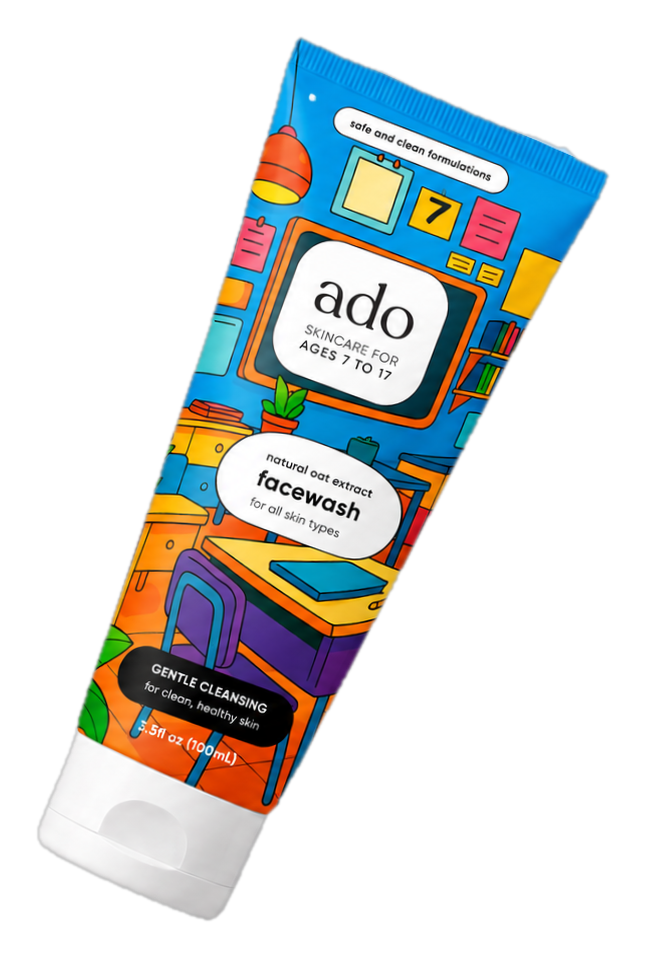
ado is an Indian skincare brand made for exactly this in-between stage: growing skin aged 7–17, not baby care and not adult skincare. The Tween's Kit covers the three steps with oat in every step: the sulfate-free, non-comedogenic gentle oat face wash, the lightweight, pH-balanced daily moisturiser with squalane, and ado's mineral SPF 50+ sunscreen, where zinc oxide is the only UV filter, with no retinoids, exfoliating acids or vitamin C serums in the range. ado's products contain fragrance (it's the last ingredient on each label); if your tween's skin is sensitive, patch-test first or choose a fragrance-free option. For pimples that aren't settling, a dermatologist is the right next step.
Sources
- Understanding Puberty · Nemours KidsHealth
- Talking to Your Child About Puberty · Nemours KidsHealth
- Trendy Skin Care for Tweens & Teens: Is It Safe? · American Academy of Pediatrics (HealthyChildren.org)
- The digital dermatosis: social media's unintended impact on pre-adolescent skincare · Indian Journal of Dermatology, Venereology and Leprology (IJDVL)
- A dermatologist's guide to skincare from growing up to glowing up · American Academy of Dermatology
- Face washing 101 · American Academy of Dermatology
- Acne: Tips for managing · American Academy of Dermatology
- 5 ways to help your teenager survive acne · American Academy of Dermatology
- Practical Recommendations for Indians on Sunscreen Use: A Modified Delphi Consensus by Indian Sunscreen Forum (PRISM-ISF) · Journal of Cosmetic Dermatology (via PubMed Central)
This guide is general information for parents, not medical advice. If you're worried about your child's skin, please see a dermatologist or paediatrician. How we write these guides.