Skincare by age
Skincare for Teens (13–17): A Simple Routine That Works
Oily skin, pimples, sweat and sunscreen: a no-fuss routine for 13 to 17 year olds, boys and girls, and when to see a dermatologist.
Quick answer
Most teens need a simple routine: a gentle face wash morning and night and after sport, a light non-greasy moisturiser, and a broad-spectrum sunscreen every morning. The same routine works for boys and girls. Don't pick pimples, never use steroid creams on the face, and see a dermatologist if acne is scarring or not settling.
A teenager's skincare routine can be three steps: a gentle face wash morning and night (and after sport), a light non-greasy moisturiser, and a broad-spectrum sunscreen every morning. Add "don't pick", "no steroid creams" and "see a dermatologist when acne isn't settling", and you've covered most of what matters.
This guide is for parents of 13 to 17 year olds in India, and for teens reading it themselves. It works for boys and girls alike. Younger child? See skincare for tweens (10–12) or skincare for kids aged 7–9.
Why does teenage skin get oily and break out?
Hormones. KidsHealth (Nemours) explains that hormones released during puberty lead to body odour and acne. Oil glands get busier, pores clog more easily, and blackheads, whiteheads and pimples show up on the face, chest or back.
Pimples at this age come with growing up. They aren't a sign your teen is dirty or doing something wrong. And the American Academy of Dermatology (AAD) says that, with today's options, dermatologists can help virtually every case of acne.
What's a simple skincare routine for a teenager?
Three steps: face wash, moisturiser and sunscreen in the morning, then face wash and moisturiser at night, plus a rinse after sport.
| When | Steps | Tip |
|---|---|---|
| Morning | Face wash, moisturiser, sunscreen | Sunscreen is the last step, before leaving home. |
| After sport or a sweaty day | Rinse or wash the face | Blot sweat with a clean towel rather than rubbing. |
| Night | Face wash, moisturiser | Washes off sunscreen, sweat, city dust and any makeup. |
| Trying something new | One product at a time | Test a small amount on a patch of skin first. |
A few habits make it work better. The AAD's face-washing advice is lukewarm water, fingertips instead of cloths or sponges, no scrubbing, and patting dry. Its acne tips add: keep hands off the face, and keep oiled or oily hair away from the forehead, because oil from the hair can cause pimples there.
Teens with frequent breakouts sometimes need acne ingredients on top of these basics. The AAD's 2025 skincare guide notes these can dry and irritate the skin, so it's worth asking a dermatologist what to use rather than stacking products from social media. More in skincare routine for a 13-year-old and face wash for teenagers in India. If your teen is curious about serums, first read our guides to ingredients to avoid, like retinol, acids and vitamin C and niacinamide and adult skincare for young teens.
What about boys, sport and sweat?
The routine is the same for boys and girls; sporty teens just add a wash after training and a sunscreen top-up before heading back out.
For boys
Boys need the same three steps. They often start puberty a little later than girls: KidsHealth puts most boys between 9 and 14, and most girls between 8 and 13. If your son sees skincare as "not for boys", frame it as kit, like a cricket helmet: sunscreen before practice, a face wash after. A gel-textured moisturiser keeps it quick, and if he has started shaving, moisturiser afterwards helps skin feel comfortable.
For sport and sweat
- Helmets, chin straps and tight kit trap heat and sweat against the skin. The AAD links this to a type of acne called acne mechanica, and suggests clean, soft padding between gear and skin, plus moisture-wicking clothes.
- Blot sweat with a clean towel instead of wiping it off, and wash sweaty kit before wearing it again (AAD).
- Wash the face after training, then reapply sunscreen if heading back outside. Reapply after swimming, sweating or towel drying.
Which sunscreen suits oily, pimple-prone teen skin?
A light one they'll actually wear. For oily or acne-prone skin, the Indian Sunscreen Forum suggests non-comedogenic, oil-free textures such as gels, water-based lotions or "dry-touch" formulas. Non-comedogenic means a product is made so it's less likely to clog pores (comedones are blackheads and whiteheads).
Sunscreen also matters for acne marks. The dark patches pimples can leave behind, called post-inflammatory hyperpigmentation, are more common in deeper skin tones, and the forum stresses broad-spectrum protection for them. The AAD suggests SPF 30 or higher. A PA rating, shown with plus signs, tells you the level of UVA protection. More in sunscreen for teenagers in India, mineral vs chemical sunscreen and our main guide to sunscreen for kids and teens in India.
Can teens wear makeup or tinted products?
Yes, with a few habits. The AAD's advice for acne-prone skin is to choose products labelled "oil-free", "won't clog pores" or "non-comedogenic"; remove all makeup, including eye makeup, before bed; clean brushes every week; and not share them. For a little tint with sun protection, the American Academy of Pediatrics suggests tinted mineral sunscreens for deeper skin tones.
Why should teens never put steroid creams on their face?
Because steroid creams can damage facial skin and often make acne worse, not better. In India, creams containing steroids are sometimes passed around as a quick fix for pimples or used as an everyday face cream. A study across 12 Indian dermatology centres, published in IJDVL, found that facial steroid use was often started on the advice of people who weren't doctors, and acne was one of the most common reasons. Most people using these creams had side effects, and acne itself was the most common one.
Dermatologists call this kind of damage TSDF: topical steroid dependent or damaged face. The rule is simple: no cream from the chemist goes on the face unless a doctor has prescribed it for that purpose. If your teen is already using one, see a dermatologist rather than just swapping creams. Our guide to steroid creams on your child's face explains the warning signs.
When should a teen see a dermatologist?
See a dermatologist if: pimples are leaving dark marks or scars; acne hasn't improved after a few months of over-the-counter care (AAD); your teen has been using a steroid or "mixed" cream on the face; a product causes a rash, swelling or redness that doesn't settle once stopped; or acne is affecting their mood, such as sadness lasting two weeks or more, losing interest in things they enjoy, or avoiding friends.
Supporting their confidence
Acne can hit self-esteem hard, and the AAD notes that self-esteem tends to rise as acne improves, so it's worth taking seriously rather than waiting for it to pass. The AAD also says teens can hear daily reminders as nagging. It suggests focusing on keeping dermatology appointments instead, and letting your teen meet the dermatologist on their own. Keep comments about their face to a minimum, and remind them the changes are normal. Our guide to pimples at 13 has more on what helps.
Weighing up teen brands? Our ado vs generic teen-care brands page shows which actives each range uses and who they suit.
Read next: skincare routine for a 14 or 15-year-old · skincare routine for a 16 or 17-year-old · skincare by age, from 7 to 17
How ado fits in
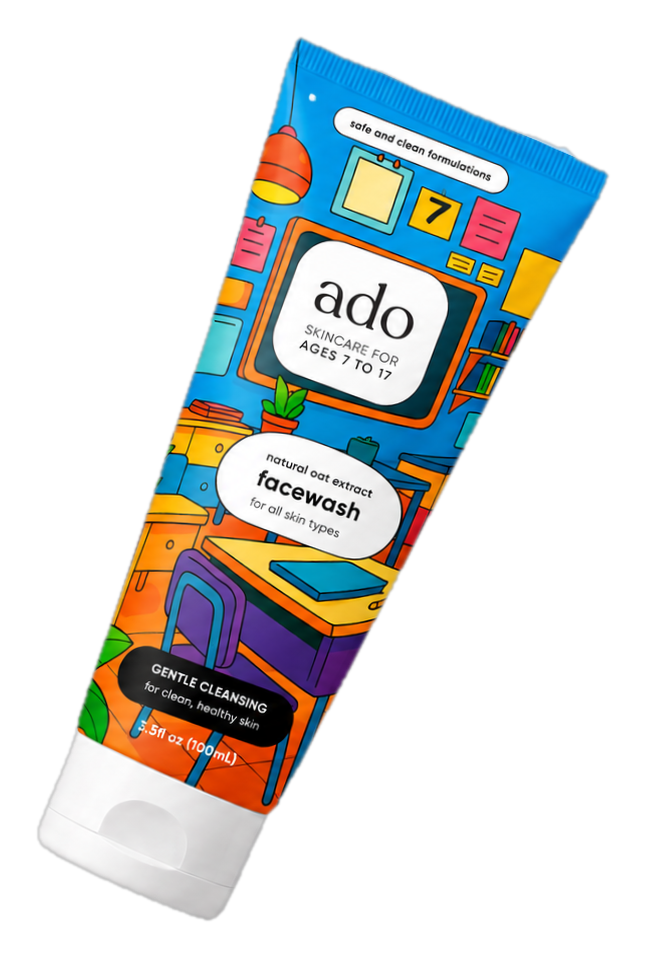
ado is an Indian skincare brand with a three-step routine for growing skin aged 7–17, and teens can use it as it is. The gentle oat face wash (sulfate-free) and ado's mineral SPF 50+ sunscreen (zinc oxide is its only UV filter) are both labelled non-comedogenic. The daily moisturiser is a lightweight, non-greasy, pH-balanced gel-cream, and there's oat in every step. It's gentle daily care, not an acne product, so for acne that isn't settling, a dermatologist comes first; all three come together in the Tween's Kit.
Sources
- Understanding Puberty · Nemours KidsHealth
- A dermatologist's guide to skincare from growing up to glowing up · American Academy of Dermatology
- Face washing 101 · American Academy of Dermatology
- Acne: Tips for managing · American Academy of Dermatology
- 5 ways to help your teenager survive acne · American Academy of Dermatology
- Is sports equipment causing your acne? · American Academy of Dermatology
- 12 summer skin problems you can prevent · American Academy of Dermatology
- I have acne! Is it okay to wear makeup? · American Academy of Dermatology
- Trendy Skin Care for Tweens & Teens: Is It Safe? · American Academy of Pediatrics (HealthyChildren.org)
- Practical Recommendations for Indians on Sunscreen Use: A Modified Delphi Consensus by Indian Sunscreen Forum (PRISM-ISF) · Journal of Cosmetic Dermatology (via PubMed Central)
- Topical corticosteroid abuse on the face: a prospective, multicenter study of dermatology outpatients · Indian Journal of Dermatology, Venereology and Leprology (IJDVL)
This guide is general information for parents, not medical advice. If you're worried about your child's skin, please see a dermatologist or paediatrician. How we write these guides.