RoutinesAges 13–17
Skincare Routine for a 13-Year-Old: What They Need, What to Buy and What They Don't
Oilier skin and the first pimples change things a little, but not as much as social media suggests. A calm plan for 12 to 14-year-olds.

Quick answer
A 13-year-old needs the same three basics as a younger child: a gentle cleanser twice a day, a light non-comedogenic moisturiser, and broad-spectrum sunscreen (SPF 30 or higher) every morning. If pimples are painful, leave marks or aren't better after a few months, a dermatologist can add one acne step. Skip serums, retinol and vitamin C.
A 13-year-old needs the same three basics as a younger child: a gentle face wash, a light moisturiser and sunscreen, used every day. What changes at this age is oil, and with it the first pimples. If those pimples become painful or stubborn, a dermatologist can add one acne step. Your teen doesn't need serums, retinol or a 10-step routine.
This guide is for parents of 12 to 14-year-olds, and for teens reading along. It covers the daily routine, what to do about oily skin, hair oil, sports and shaving, and when it's time to see a dermatologist.
What changes in a 13-year-old's skin?
The main change is more oil, and with it the first pimples. Puberty hormones tell the oil glands in the skin to make more sebum, the skin's natural oil. Extra oil plus dead skin cells can block pores, and normal skin bacteria then multiply inside them, causing red, swollen bumps. That's how the American Academy of Pediatrics (AAP) explains teen acne, and it notes that around 85% of people get acne as teenagers.
In practice, you might see:
- a shiny forehead, nose and chin by lunchtime
- blackheads (open, clogged pores) and whiteheads (closed, clogged pores)
- red pimples, often before exams, or before a period for girls
- more sweat, especially after games or a long day in a school uniform
None of this means your teen is doing anything wrong. The American Academy of Dermatology (AAD) describes it simply: tweens learn the basics, and teens then face new challenges from hormones that can lead to acne and oily skin.
What's a simple skincare routine for a 13-year-old?
A 13-year-old's routine is three steps: a gentle face wash, a light moisturiser and sunscreen in the morning, then face wash and moisturiser at night. Keep the same steps as before, and choose textures that suit oilier skin.
| When | Step | What to look for |
|---|---|---|
| Morning | 1. Cleanse | Gentle face wash (fragrance-free if skin is sensitive); no scrubs, no harsh sulfates such as SLS |
| Morning | 2. Moisturise | Light gel or gel-cream labelled non-comedogenic (made not to clog pores) |
| Morning | 3. Protect | Broad-spectrum sunscreen, SPF 30 or higher, reapplied after sweating or swimming |
| After sport | Rinse or wash | Wash the face after heavy sweating |
| Evening | 1. Cleanse | Same face wash, to remove sunscreen, sweat and dust |
| Evening | 2. Moisturise | Same light moisturiser |
A few habits make the routine work:
- Wash with fingertips, not a scrubber. The AAD warns that washcloths, sponges and other tools can irritate skin.
- Don't wash more than twice a day plus after sweating. Over-washing and scrubbing don't get rid of pimples; the AAP points out that acne is not caused by dirt and can't be scrubbed off.
- Keep the moisturiser, even with oily skin. A light gel stops skin feeling tight, which matters more if a dermatologist later adds a drying acne product.
- Make sunscreen the last morning step. Choose one labelled non-comedogenic if pimples are an issue.
For help choosing each step, see our guides to face wash for teenagers in India and sunscreen for teenagers with oily skin, or start with our parent's guide to sunscreen for kids in India.
Is it different for girls and boys?
The basics are the same. Girls may notice more pimples just before a period, which the AAP links to hormone changes. Boys may start shaving, which has its own tips below. If your teen wears makeup, the NHS suggests taking it off at the end of the day, and the AAP suggests oil-free products labelled non-comedogenic.
When does an acne step make sense, and who should choose it?
An acne step makes sense when pimples keep coming despite a steady, gentle routine, and a dermatologist is the best person to choose it. For many 13-year-olds, gentle twice-daily care, sunscreen and not picking are enough for mild, occasional pimples. For others, pimples keep coming.
The AAD's 2025 guide says that as oil increases, it "may be helpful" for teens to add an acne ingredient such as salicylic acid or benzoyl peroxide, while keeping skin moisturised and protected from the sun. Both can cause dryness and irritation. The same guide says that in some cases a dermatologist may recommend a retinoid, and that it's important to consult a dermatologist first.
Our suggestion for parents in India:
- Start with the basics. Give a steady routine a fair trial. In its advice on acne that won't clear, the AAD says that if something you try for acne works, you should see some improvement in 4 to 6 weeks, and clearing can take two to three months or longer.
- Let a dermatologist choose the acne step. They can match the product and strength to your teen's skin, and tell you how to use it.
- Add one thing at a time. Layering several acne products, toners and acids at once is a common route to red, peeling skin.
- Be careful with creams bought on a tip. In a 12-centre Indian study published in IJDVL, many people using steroid creams on the face had been advised by friends, relatives, pharmacists or beauticians rather than a doctor, and acne was one of the most common reasons. Steroid creams can make acne worse; read why dermatologists warn against steroid creams on the face.
For a full guide to breakouts, including myths and home remedies, see pimples at 13: what helps and what to avoid.
Why are there pimples on the forehead? Hair oil, helmets and sweat
Forehead pimples in teens are often linked to hair oil, caps and helmets, and trapped sweat, on top of the extra oil puberty brings.
Hair oil
Many Indian families oil their children's hair. The AAD notes that oils in hair products can cause small breakouts along the hairline and forehead, and that the acne slowly clears once the product causing it is stopped. The AAP's advice is simpler: if you use hair grease, try not to get it on the skin. The same logic applies to hair oil.
- Oil the scalp before a hair wash, rather than leaving oil in for days.
- Keep oily hair and fringes off the forehead, especially at night.
- Wash pillowcases, caps and headbands often; the AAD lists these among things to clean.
- For styling, the AAD suggests water-based or glycerin-based products for people with breakouts on the forehead and temples.
Helmets, straps and sweat
Cricket helmets, cycle helmets and chin straps trap heat and sweat against the skin. The AAD calls the result acne mechanica: small, rough bumps where gear rubs, which can turn into pimples. It suggests placing clean, soft padding between gear and skin, and wearing loose, moisture-wicking clothes. Wash the face after heavy sweating, and reapply sunscreen after sweating or towel drying.
What about shaving and threading?
Some boys start shaving around this age, and some girls start threading eyebrows or the upper lip. Neither is required; both are fine to do carefully.
Shaving basics
- The AAD suggests wetting the skin and hair first, using a shaving cream or gel, and shaving in the direction the hair grows.
- Rinse the blade after each stroke, replace blades or disposable razors after 5 to 7 shaves, and store the razor somewhere dry.
- With pimples, shave lightly and never try to shave a pimple off. KidsHealth suggests an electric razor for a while if a pimple or cut is in the way.
Threading basics
Threading is widely used in India. An Indian dermatologist's report in Clinical and Experimental Dermatology (2009) described possible complications, including redness, inflamed hair follicles (folliculitis), ingrown hairs, light or dark patches, and warts spreading along threaded eyebrows. It's sensible to choose a clean salon, skip threading over broken skin or active pimples, and see a dermatologist if bumps or patches don't settle.
What doesn't a 13-year-old need?
The AAD recommends that tweens and teens avoid retinol, vitamin C and exfoliating acids unless a dermatologist advises them, because these target wrinkles, sun damage and uneven tone. The AAP adds fragrance, alcohol-heavy toners and physical scrubs to the list.
Social media makes long routines look normal. A 2025 study in Pediatrics of 100 TikTok routines by creators aged 7 to 18 found an average of six products per routine, and only about a quarter of videos included sunscreen. For the full list, see skincare ingredients tweens should avoid and our answer to whether teens can use niacinamide or adult skincare.
When should you see a dermatologist?
See a dermatologist when pimples are painful, scarring or not improving after a few months of gentle care, or when skin reacts to products.
See a dermatologist if:
- pimples are deep, painful or cyst-like
- breakouts are leaving dark marks or scars
- acne hasn't improved after a few months of steady, gentle care
- skin stings, burns or peels after products, or your teen has sensitive skin
- someone has been applying a steroid or "all-in-one" cream to the face
- razor bumps or bumps after threading keep coming back
Also watch how your teen feels. The AAD notes that acne can lead to depression, anxiety or both. If your teen seems sad for two weeks or more, stops enjoying things or pulls away from friends, talk to your doctor. The AAD also suggests letting teens spend some time alone with the dermatologist, so they can ask their own questions.
What should you buy for a 13-year-old's skin?
The same three products, now chosen for oilier, pimple-prone skin: look for "non-comedogenic" or "oil-free" on everything that stays on the face. If pimples need more, that's one extra product, ideally chosen by a dermatologist.
- Face wash: "gentle" and "sulfate-free", used with fingertips rather than a scrubber. Skip gritty scrubs: the AAP lists physical scrubs among things to avoid.
- Moisturiser: a light gel or gel-cream labelled "non-comedogenic" or "oil-free". The AAP suggests gel textures for oily or acne-prone skin.
- Sunscreen: "broad spectrum", SPF 30 or higher and "non-comedogenic". The Indian Sunscreen Forum suggests oil-free gels, water-based lotions or silicone-based "dry-touch" sunscreens for acne-prone skin, and prefers mineral filters (zinc oxide or titanium dioxide) for children.
Skip at 13: retinol and other retinoids unless a dermatologist advises one, at-home acid peels, vitamin C serums, skin-lightening or de-tan creams, and acne kits that stack several products at once.
Budget: three basics, plus at most one acne product if a dermatologist suggests it. Anything more mostly adds cost and more chances of irritation.
Read next: skincare routine for a 14 or 15-year-old · skincare routine for a 12-year-old · skincare by age, from 7 to 17 · skincare for teenage boys
How ado fits in
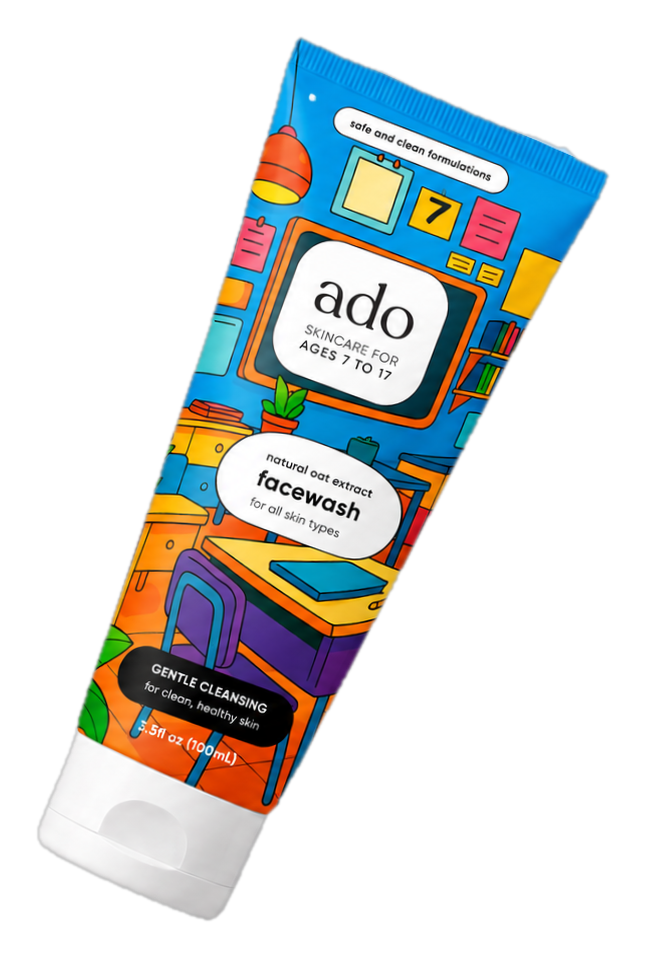
ado's Tween's Kit covers the three basics for ages 7–17: a sulfate-free face wash with oat kernel extract, a lightweight gel-cream moisturiser with a non-greasy finish, and a broad-spectrum SPF 50+ sunscreen where zinc oxide is the only UV filter. The face wash and sunscreen are labelled non-comedogenic (the moisturiser's label doesn't say so), and there are no retinoids, exfoliating acids or vitamin C serums in the range. ado's products contain fragrance (it's the last ingredient on each label); if your teen's skin is sensitive, patch-test first or choose a fragrance-free option. If your teen's dermatologist adds an acne product, ask them how it fits with the rest of the routine.
For more on this age group, visit our hub on skincare for teens (13–17).
Made for growing skin


The complete routine
Tween's Kit
The complete ado routine in one box: cleanse, moisturise, protect.
- Cleanse Facewash
- Hydrate Moisturiser
- Protect Sunscreen
Price
₹2,699Regular price
₹3,297
Save ₹598
Sources
- A dermatologist's guide to skincare from growing up to glowing up (28 Oct 2025) · American Academy of Dermatology
- Trendy Skin Care for Tweens & Teens: Is It Safe? (2025) · American Academy of Pediatrics / HealthyChildren.org
- Teen Acne: How to Treat & Prevent This Common Skin Condition (2025) · American Academy of Pediatrics / HealthyChildren.org
- What makes teen acne worse? · American Academy of Pediatrics / HealthyChildren.org
- Acne: Tips for managing · American Academy of Dermatology
- 9 things to try when acne won't clear · American Academy of Dermatology
- Are your hair care products causing breakouts? · American Academy of Dermatology
- 10 tips for clearing acne in darker skin tones · American Academy of Dermatology
- Is sports equipment causing your acne? · American Academy of Dermatology
- Hair removal: How to shave · American Academy of Dermatology
- Shaving (for teens) · KidsHealth (Nemours)
- Eyebrow threading: a popular hair-removal procedure and its seldom-discussed complications (Clin Exp Dermatol 2009; PubMed record) · Clinical and Experimental Dermatology
- 5 ways to help your teenager survive acne · American Academy of Dermatology
- Acne · NHS
- Pediatric Skin Care Regimens on TikTok (Pediatrics, 2025; PubMed record) · Pediatrics / American Academy of Pediatrics
- Topical corticosteroid abuse on the face: a prospective, multicenter study of dermatology outpatients (2011) · Indian Journal of Dermatology, Venereology and Leprology
- Practical Recommendations for Indians on Sunscreen Use: A Modified Delphi Consensus by Indian Sunscreen Forum (PRISM-ISF), J Cosmet Dermatol 2025 · Journal of Cosmetic Dermatology (Indian Sunscreen Forum)
This guide is general information for parents, not medical advice. If you're worried about your child's skin, please see a dermatologist or paediatrician. How we write these guides.